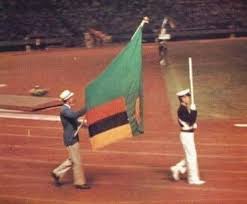
Independence of the Republic of Zambia was formally declared on 24th October, 1964, that is the clothing day of 1964 Tokyo Summer Olympics.
Republic of Zambia
Zambia /ˈzæmbiә/, officially the Republic of Zambia, is a land linked country in Southern Africa. The neighboring countries are the Democratic Republic of the Congo to the north, Tanzania to the north-east, Malawi to the east, Mozambique, Zimbabwe, Botswana and Namibia to the south, and Angola to the west. The capital city is Lusaka, located in the south-central part of the country. The population is concentrated mainly around Lusaka in the south and the Copperbelt Province to the northwest.
Originally inhabited by Khoisan peoples, the region which comprises modern Zambia was colonised during the Bantu expansion of the thirteenth century. After visits by European explorers in the eighteenth century, Zambia became the British Protectorate of Northern Rhodesia towards the end of the nineteenth century. For most of the colonial period, the country was governed by an administration appointed from London with the advice of the British South Africa Company.
Olympics 1964 Tokyo Summer Games
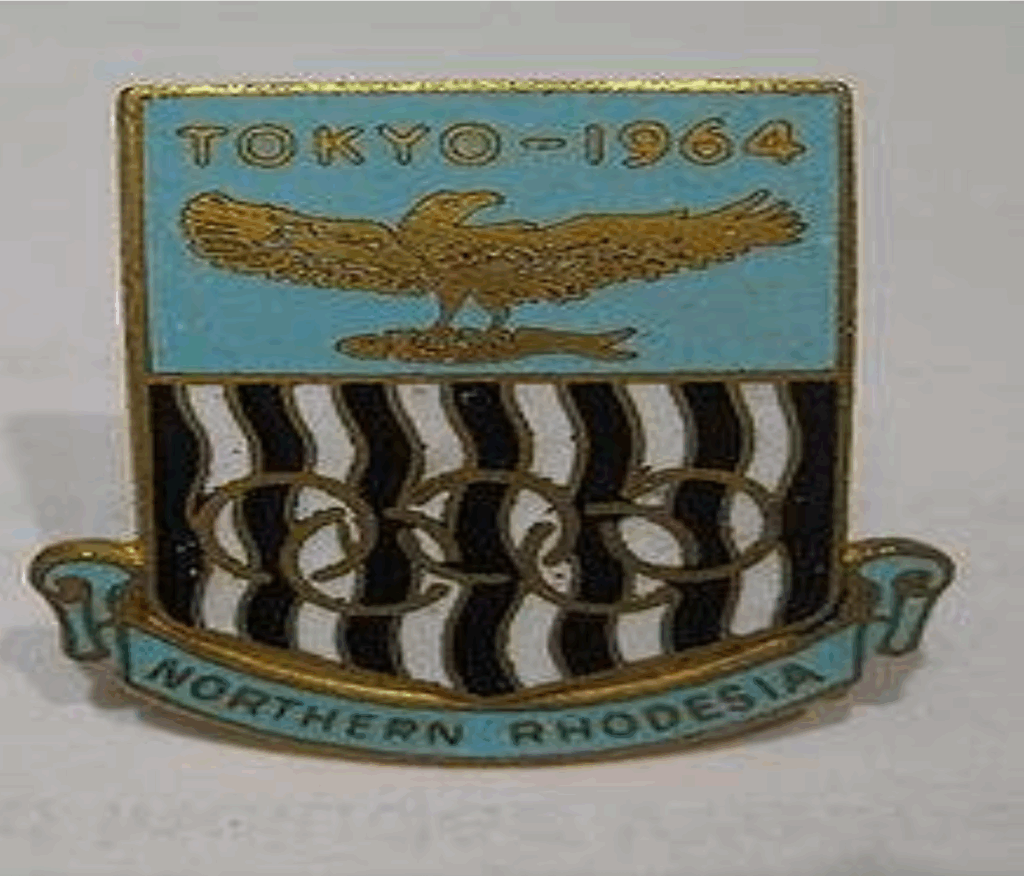
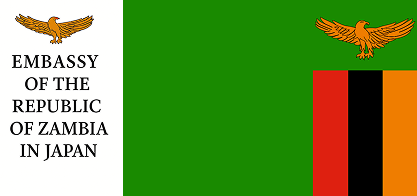
Zambia became the first country ever to change its name and flag between the opening and closing ceremonies of an Olympic Games. The country entered the 1964 Summer Olympics as Northern Rhodesia, and left in the closing ceremony as Zambia on 24 October, the day independence was formally declared.
Summer Games Index: Previous Summer Games ▪ Next Summer Games
Host City: Tokyo, Japan (October 11, 1964 to October 24, 1964)
Opening Ceremony: October 10, 1964 (opened by Emperor Hirohito)
Lighter of the Olympic Flame: Yoshinori Sakai
Taker of the Olympic Oath: Takashi Ono (athlete)
Closing Ceremony: October 24, 1964
Events: 163 in 21 sports
NORTHERN RHODESIA
Northern Rhodesia was a protectorate in south central Africa, formed in 1911 by the amalgamating the two earlier protectorates of North-Western Rhodesia and NorthEastern Rhodesia. It was initially administered, as were the two earlier protectorates, by the British South Africa Company, (BSAC), a chartered company on behalf of the British government. Although under the BSAC charter, it had features of a charter colony the BSAC’s treaties with local rulers and British legislation gave it the status of a protectorate. From 1924 it was administered by the British government as a protectorate under similar conditions to other British-administered protectorates, and the special provisions required when it was administered by BSAC were terminated. The territory attracted a relatively small number of European settlers, but from the time these first secured political representation, they agitated for white minority rule, either as a separate entity or associated with Southern Rhodesia and possibly Nyasaland. The mineral wealth of Northern Rhodesia made full amalgamation attractive to Southern Rhodesian politicians, but the British government preferred a looser association to include Nyasaland. This was intended to protect Africans in Northern Rhodesia and Nyasaland from discriminatory Southern Rhodesian laws. The Federation of Rhodesia and Nyasaland formed in 1953 was intensely unpopular among the African majority and its formation hastened calls for majority rule. As a result of this pressure, the country became independent in 1964 as Zambia. The geographical, as opposed to political, term “Rhodesia” referred to a region generally comprising the areas that are today Zambia and Zimbabwe.[1] From 1964 it only referred to the former Southern Rhodesia.
Federation of Rhodesia and Nyasaland
The Federation of Rhodesia and Nyasaland, also known as the Central African Federation (CAF), was a semi-independent state in southern Africa that existed from 1953 to the end of 1963, comprising the former self-governing colony of Southern Rhodesia and the British protectorates of Northern Rhodesia and Nyasaland. It was a federal realm of the British Crown – neither a colony nor a dominion, although the British Sovereign was represented by a governor general, as usual for dominions. It was intended eventually to become a dominion in the Commonwealth of Nations.
The Federation was established on 1 August 1953, with the aim of forging a middle way between a fully independent majority-ruled state and the white-dominated territories of South Africa, Angola, and Mozambique.[dubious – discuss] It was intended to be a permanent entity, but ultimately crumbled because the black African nationalists wanted a greater share of power than the dominant minority white population was willing to concede.
The rulers of the new black African states were united in wanting to end colonialism in Africa. With most of the world moving away from colonialism during this time (late 1950s – early 1960s), the United Kingdom was subjected to pressure to de-colonize from both the United Nations and the Organization of African Unity. These groups supported the aspirations of the black African nationalists and accepted their claims to speak on behalf of the people.
The federation officially ended on 31 December 1963. During 1964, Northern Rhodesia gained independence from the UK as the new nation of Zambia and Nyasaland gained independence as the new nation of Malawi. Southern Rhodesia became known as Rhodesia and has been Zimbabwe since 1980.
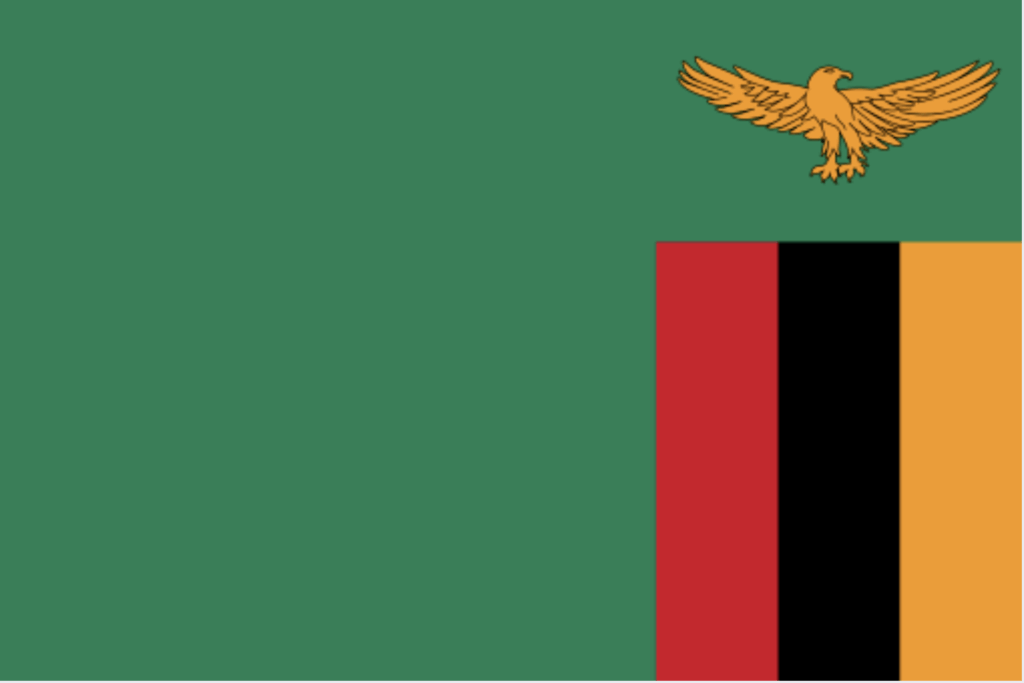
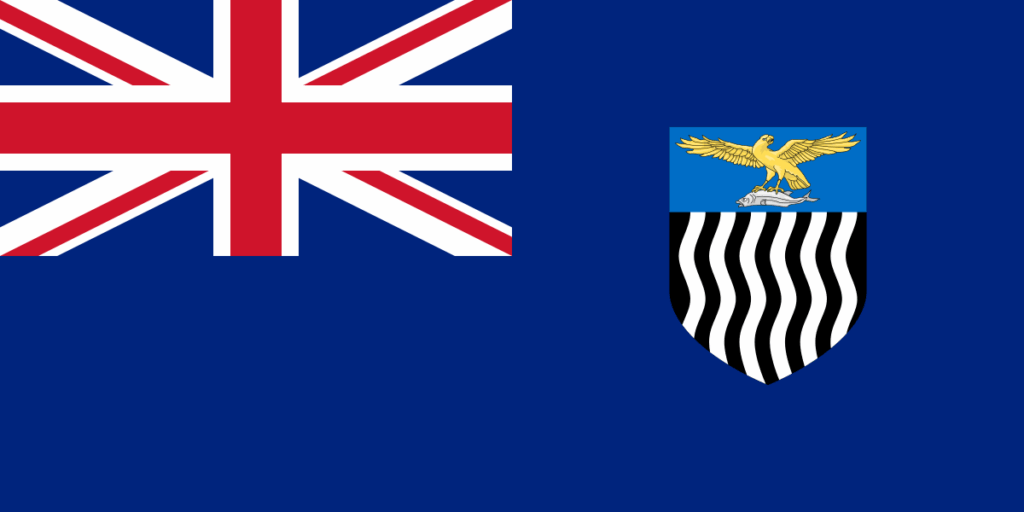
Independence on 24th October 1964
On 24 October 1964, the country became independent of the United Kingdom and thenprime minister Kenneth Kaunda became the inaugural president. Kaunda’s socialist United National Independence Party (UNIP) maintained power from the 1964 until 1991. From 1972 to 1991 Zambia was a single-party state with the UNIP as the solelegal political party, with the goal of uniting the nation under the banner of ‘One Zambia, One Nation’. Kaunda was succeeded by Dr. Frederick Chiluba of the Movement for Multi-Party Democracy in 1991. Dr. Chiluba selected Mr. Levy Mwanawasa as his successor; Mwanawasa presided over the country from January 2002 until his death in August 2008, and is credited with initiating a campaign to reduce corruption and increase the standard of living. After Mr. Mwanawasa’s death, Mr. Rupiah Banda presided as Acting President before being elected president in 2008. He is the shortest serving President, having held office for only three years. Patriotic Front party leader, His Excellency Mr. Michael Chilufya Sata defeated Mr. Banda in the 2011 elections.
In 2010, the World Bank named Zambia one of the world’s fastest economically reformed countries. The Common Market for Eastern and Southern Africa (COMESA) is headquartered in Lusaka.